


It isn’t sexy. It isn’t exciting. You’re probably not even feeling inclined to read about it. But discipline is one of the most defining traits of consistently excellent consultants.
It shows up time and again in our consulting training - starkly in business development and sales work, but it’s equally essential in delivery, internal leadership, and firm-building. We consider it one of the six factors that underpin performance at every stage of a consulting career.
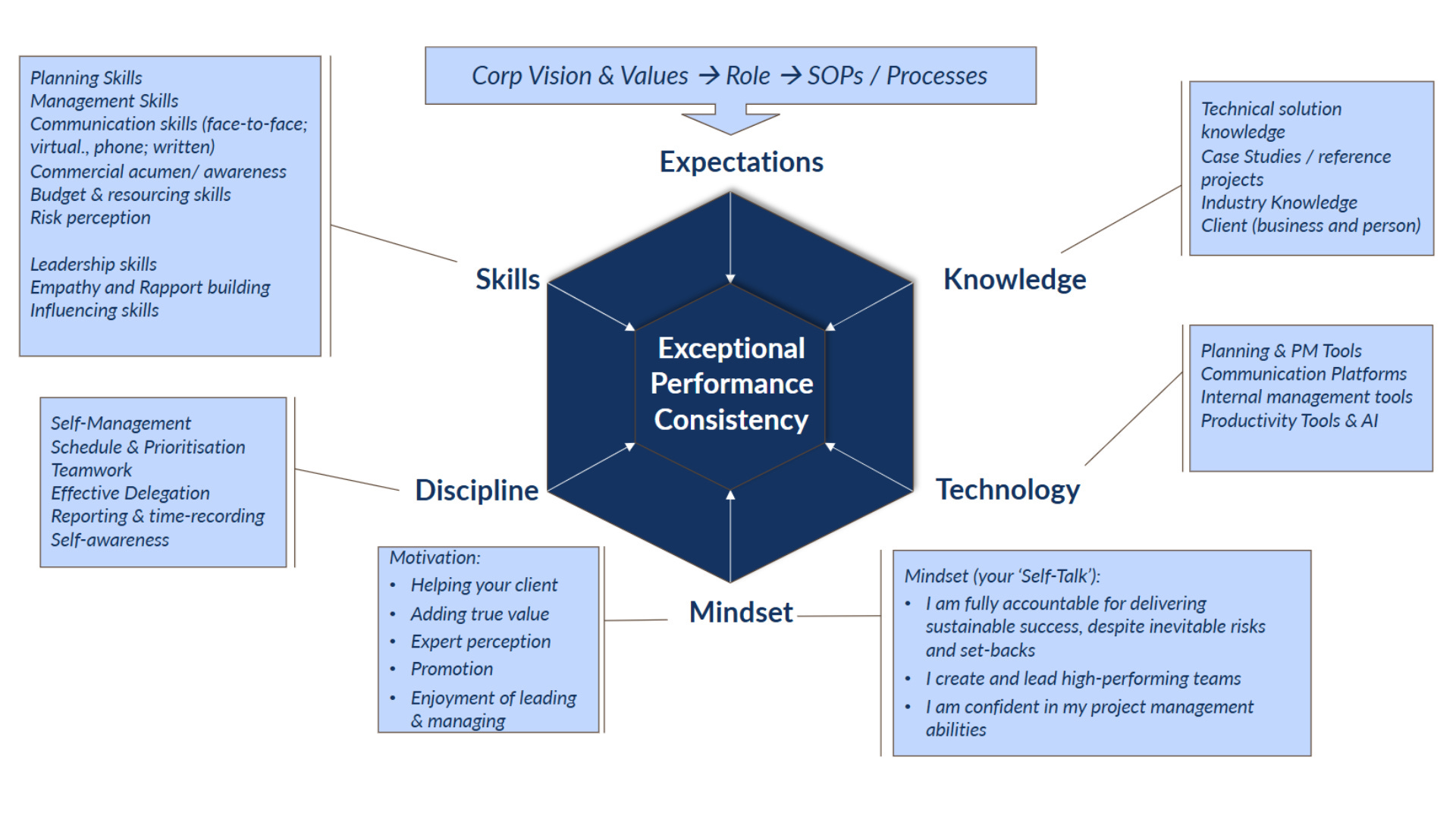
This article explores what discipline really means in consulting, why it’s so hard to maintain, and what mechanisms can help.

Excellent delivery is underpinned by discipline
Let’s begin with the delivery space. There’s the obvious stuff: being rigorous in analysis, ensuring our insights are based on reliable data, and applying proper QA processes.
But there’s also discipline in the basics, like preparing well for client meetings. Most consultants know they should set a clear purpose, outcome, structure, and timing (POST) for every meeting. But when you look at your calendar and ask how many of your own meetings have this, discipline is often found wanting.
Delegation is another key area. As pressure mounts, we can slip in two ways:
Under-delegating, because it feels faster to do it ourselves (even though it isn’t in the long run).
Over-delegating, because we don’t have time to give proper direction or support we default to a hands-off, overly empowering style, and hope for the best.
Similarly, most leaders know they should create stretch opportunities for their team and follow up with coaching and feedback. But do we do this consistently? And when feedback is required in the moment, are we disciplined enough to offer it?
In business development, discipline often beats skill
In BD and sales, discipline often matters more than skill. The real challenge isn’t knowing what to do. It’s doing it. Repeatedly.
Take network nurturing: many consultants know they should build and maintain relationships over time. But it requires consistent, often unglamorous, effort. The “3-2-1” model we sometimes share is a good example. After a networking event:
Within 3 hours: make initial contact (ideally on LinkedIn).
Within 2 days: send a follow-up (e.g. an article you discussed).
Within 1 week: send something more substantial (e.g. a proposal to meet).
This process isn’t complicated. But it requires discipline. Too often, we return from a great event and dive straight back into delivery. The moment is lost.
The same applies to visibility. Having a consistent digital presence builds credibility. But posting regularly, with a cadence that reinforces your brand, takes discipline.
Without discipline, the internal work never gets done
Then there’s the work we do for the firm: internal initiatives, compliance, proposition development, content management. These almost always come third.
First priority: client delivery
Second: BD and sales
Third: everything else
Consequently, the initiatives most critical to firm-wide resilience sit in the “important but not urgent” quadrant. They languish.
It takes discipline (and often good leadership) to carve out time, drive momentum, and engage others to care about it too.

Why discipline breaks down
Some of the reasons are obvious: being busy, competing priorities, lack of time.
But others are more subtle:
The payoff is too far away
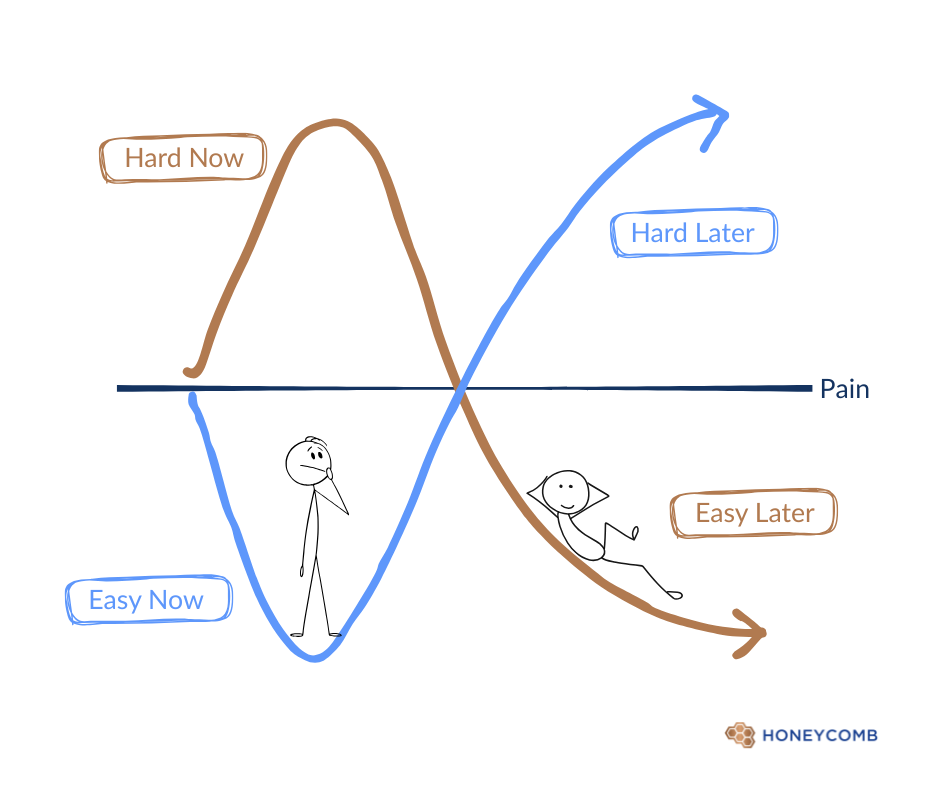
Many of these actions don’t offer immediate results. That makes them easier to deprioritise.Our inner game slips
When our energy, motivation or confidence is low - whether due to life outside work, sleep, or just the long winter - our self-talk changes. We rationalise, “It can wait.” “It’s not that important.”Fear
Delegating, posting on LinkedIn, or nudging a senior contact all carry perceived risk. Fear leads to avoidance. Avoidance erodes discipline.
So what helps?
We need to think about systems and support. Here are some practical mechanisms that help consultants stay disciplined:
Rhythm and routine
Just like regular gym-goers, many consultants succeed because they operate on rhythm. Setting times in the week for key BD or internal activities helps build that routine.
Prompted structure
E.g. syncing CRM reminders with diary holds can make a big difference. A prompt in Slack + 15 minutes in your diary = higher follow-through.
Executive support
A great EA doesn’t just manage your inbox. They know your internal tasks and prompts, and help nudge you when things are slipping.
Mutual accountability
A peer who holds you to account (and vice versa) is hugely powerful. No one wants to be the one who let the team down. This is your gym buddy effect at work.
(Emerging) AI assistance
We’re starting to explore how AI tools can help. Imagine systems that spot when your LinkedIn cadence drops, or detect CRM tasks going cold before you do. There’s promise here and we’ll share more as we test.
One final thought
Discipline isn’t just about personal willpower. It’s about designing environments, routines, and relationships that make the right thing easier to do than the easy thing.
That’s what we need more of in consulting: not heroic individual effort, but shared systems of discipline. It can seem like more effort to put those in place, but once they are, you reap the benefits for a long time to come.
Thank you for reading The Skilled Consultant. If you haven’t yet subscribed, please do so to receive all our articles direct to your inbox.
There are several other ways you can interact with Honeycomb Consulting Skills Training….
Connect with Deri Hughes (Founder & MD) on LinkedIn
Connect with Colin Mann (MD) on LinkedIn
Book a 30 minute intro call with Deri Hughes
Stay informed about our free workshops and webinars - follow Honeycomb on LinkedIn or visit our website.