


In part one of ‘How to Grow an Account’ for Consultants I argued that account growth comes down to two questions: what does it take and which way is the account going to grow? There are three growth routes - progression, replication, expansion - and a thread running through them all. It is the one consultants most often get stuck on.
Elevation. Building more senior relationships inside the client.
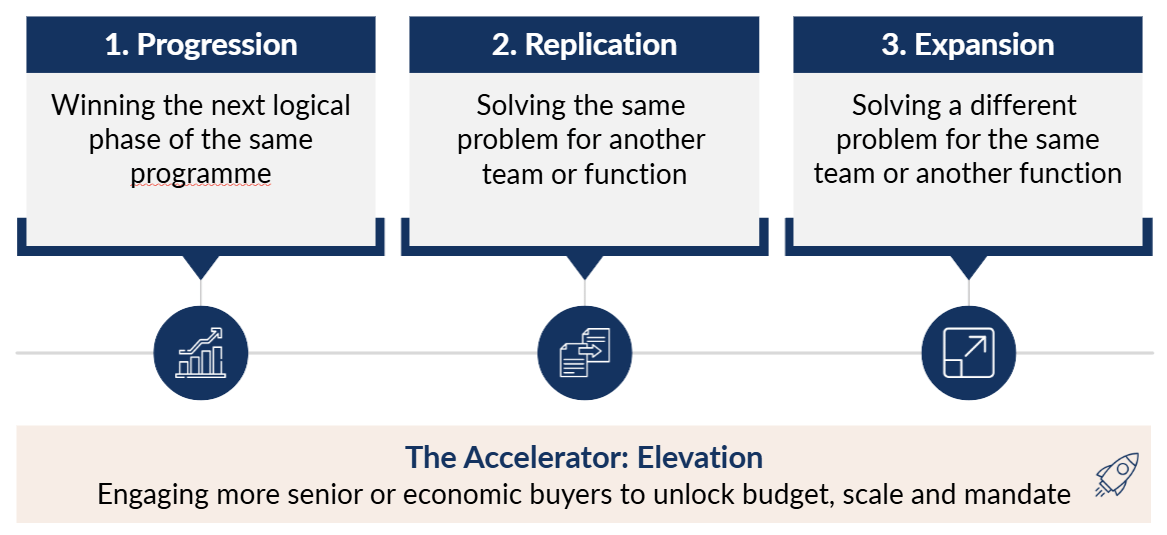
Elevation is usually the real accelerator. Sometimes it is simply about access to a larger budget. More often it is subtler.
As your firm starts to look like a strategic advisor, some clients will develop discomfort and ask whether they are becoming too reliant on one partner. And if senior people see the same consultancy engaged again and again but have no personal relationship with them, questions get asked. Was the market tested, or is this just lazy procurement? Without relationships at that level, you can find the brakes applied from above, just as the work is getting interesting.
All very well, but how do you elevate your interactions? You first need to get into the right conversations and, when you do, you need to be speaking the right language. Let’s think about what that takes.
1. Manufacturing the conversations
Any new conversation with a client is a good one. Ideally it is about a business issue, but if it is about a concert, parenting, or a sports match and it builds the relationship, that counts too. The breadth and depth of your conversations across an account is one of the better measures of whether it is really growing.
Getting into those conversations is the hard part. Start with who you want to speak to, and do not assume that only means the most senior names. It includes the management and operational roles you want to meet more regularly too. For each of them, build a picture: what are their goals, what problems do they perceive and how do they phrase them, how do your services help, and what kind of interaction or information do they actually value?
Then put hooks in place - these are legitimate reasons to make contact. There are several ways to approach this:
Delivery-based hooks are built into your current engagement. Plan it carefully and you create reasons to meet people you would otherwise never see. Build in a quarterly step-back where you invite the executive team to review progress against strategic priorities, and you have normalised senior conversation as part of the work, rather than something out of the blue.
Direct outreach is simply introducing yourself while you are on site, the walk across the floor and the follow-up LinkedIn connection. Not everyone is comfortable with it, but careers have been built on a deliberate ‘bump into someone at the coffee machine’.
Introductions are better still. Strong relationships on your current project, asked at the right moment and framed the right way, can open doors to comparable teams elsewhere, often in a way that makes your current client look good for suggesting it.
Macro hooks are marketing activity: webinars, newsletters, events. It’s easy to overlook these as tools for net-new business, but they are excellent account growth tools too. A webinar gives you a natural reason to reach out, and if the topic is pitched at an elevated level rather than the purely technical, you are far more likely to attract senior attendance.
2. Learn to speak the language
To earn senior relationships you need one skill in particular: building a narrative for a senior audience.
Technical consultants are often superb at describing what is happening operationally. But senior stakeholders need something different. They want to know what this means for the business, financially and strategically.
If a consultant has spent months reducing a client’s system downtime, or compressing the time it takes to complete a business process, that is a technical metric. This can be a comfortable place to stay. But what is the business outcome of that change? Faster time to market. Improved customer satisfaction. Risk mitigation. Revenue capture.
(extract from Can engineers make good consultative sellers?)
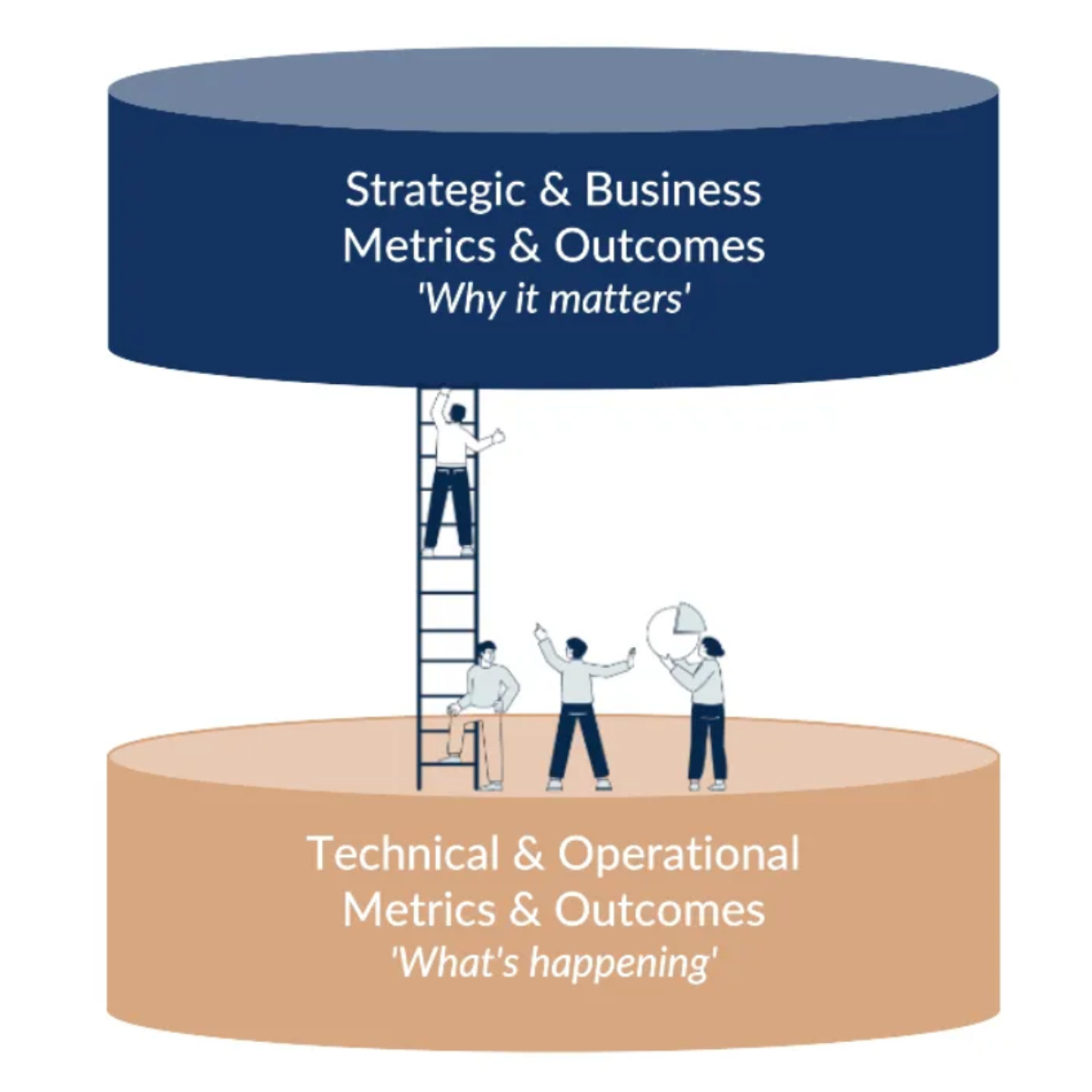
That move, up what we call the benefit or metrics ladder, is something most consultants have to build and practise deliberately. We have to train the mindset, knowledge, and authority gaps technical consultants must close as business development becomes part of their role. It rarely comes naturally.
A challenge to finish
Think about an account you want to grow and ask yourself two things:
1. Have you defined the people you need to meet and built a persona for each?
2. Do you have hooks in place to create those conversations, or, where you cannot create them alone, a clear ask of your marketing team to help?
Then here’s the challenge. Email a senior stakeholder at a current client who you have never met but would love to engage with, and use the hook that you identified to open a conversation.
If you hesitate, if part of you insists it is a terrible idea, write down the reasons why not. Some will be structural and sensible. Others will be more personal: I am not sure I am credible in their eyes; it feels presumptuous; I’ll be wasting their time. Those statements highlight the things for you to overcome if you want to be consistently strong at account growth.
Thank you for reading The Skilled Consultant. If you haven’t yet subscribed, please do so to receive all our articles direct to your inbox.
There are several other ways you can interact with Honeycomb Consulting Skills Training….
Connect with Deri Hughes (Founder & MD) on LinkedIn
Connect with Colin Mann (MD) on LinkedIn
Book a 30 minute intro call with Deri Hughes
Book a 30 minute intro call with Colin Mann
Stay informed about our free workshops and webinars - follow Honeycomb on LinkedIn or visit our website.